
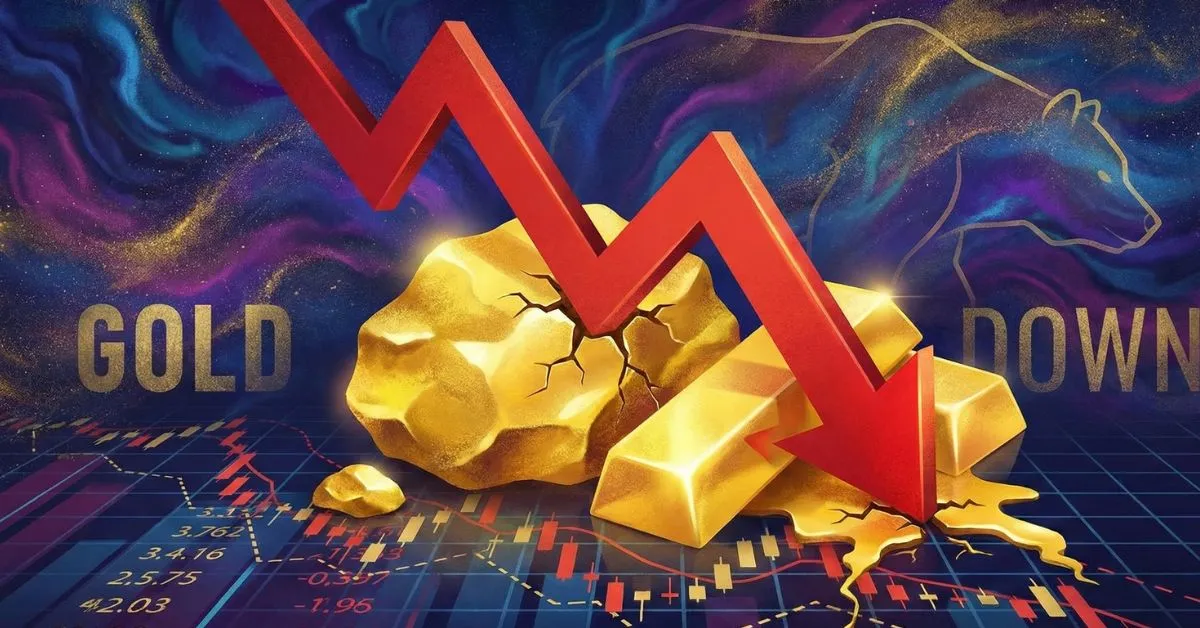
Following a significant geopolitical development—former U.S. President Donald Trump announced progress on a possible settlement on Greenland, reducing a major source of global uncertainty—gold prices halted their recent run near record highs on Thursday as financial markets reevaluated risk.
Gold shaved some of its gains, trading slightly down between $4,780–$4,825 an ounce after an incredible run into new all-time highs earlier this week, driven by fear-fueled demand for safe havens. In order to allay investor fears, Trump withdrew his tariff threats and seemed to secure a “framework” agreement on Greenland with NATO members at the World Economic Forum.
Why It stop rising
Due to increased geopolitical risk associated with Trump’s aggressive push to buy Greenland, including threats of tariffs on European countries that opposed the plan, gold led global commodities higher. Investors flocked to conventional safe havens like government bonds and bullion as a result of such threats, which heightened fears of a transatlantic stalemate. Earlier this week, spot gold reached a new high of almost $4,887.82 per ounce, but on Thursday, some of the gains were reversed.
Investors Risk
This change was strengthened by the wider market reaction. Following the Greenland announcement, major global stock indices recovered, with European and Asian stocks rising and U.S. benchmarks seeing strong increases, indicating a revived desire for riskier assets. The U.S. dollar strengthened and Treasury yields stabilized, indicating a decline in demand for haven assets.
A stronger dollar tends to drive down bullion prices by making gold more costly for holders of other currencies. This dynamic, along with profit-taking by traders who had pushed gold toward record territory earlier in the week, contributed to the rally’s cooling.
What This Means for Investors
Both the volatility associated with global headlines and the long-lasting function of gold as a hedge against uncertainty are highlighted by the current price action for investors. Important lessons include:
- 📉 Short-Term Pullback: As geopolitical risk decreases, the quick advance that brought gold close to record highs has paused.
- 📌 Long-Term Support: Structural support is still provided by underlying factors like central bank purchases, low real rates, and global macro risk.
- 🧮 Volatility Persists: Macroeconomic and political factors continue to have an impact on markets, indicating the possibility of continued price fluctuations.
Conclusion:
Geopolitical developments have a significant impact on commodities markets, as evidenced by the recent slowdown in gold’s surge near its record highs. Gold’s long-term attraction as a defensive asset continues to grow, despite Trump’s indications of a Greenland agreement framework easing some immediate anxiety and relieving pressure on the metal.
In order to navigate what is still a better time for the precious metals markets, traders and investors alike must remain aware of both macroeconomic indicators and geopolitical happenings.Since 2020 Gold rising rapidly than in decades it reched from 30 k to 1.5 lakh per gram in last 5 years it is most useful assest than stock markets . Lots of people currently invest on it because it is safe assest like real estate.