
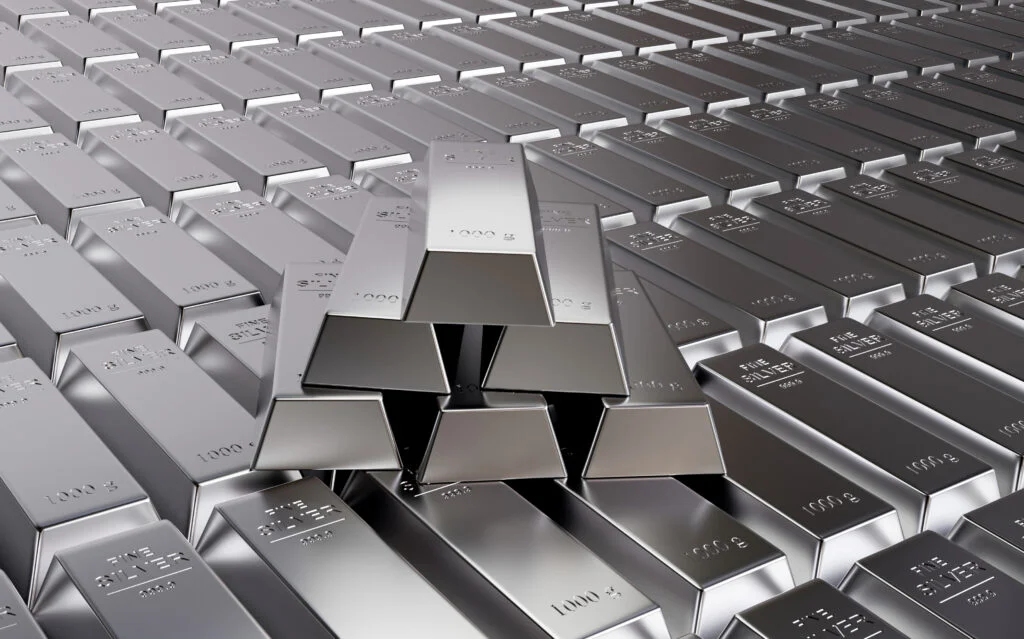
Silver has reclaimed its position as one of the most volatile and widely monitored commodities in international markets in recent years. Silver, sometimes referred to as “the poor man’s gold,” serves as both a vital industrial input and a precious metal. The causes of silver price spikes are rarely straightforward. Rather, they are a result of the convergence of investor psychology, financial market behavior, industry demand, and macroeconomic dynamics. This article explains why silver continues to garner attention during times of economic upheaval and examines the main causes of the metal’s dramatic price increases.
Inflation Fears and policy
Inflation is one of the most potent triggers for a spike in silver prices. Hard assets like precious metals are frequently used by investors and consumers who worry that the purchasing power of fiat currency is declining. Similar to gold, silver has traditionally been seen as a store of value during times of inflation.
One of the strongest causes of an increase in silver prices is inflation. Investors and consumers who are concerned about the diminishing purchasing power of fiat money often turn to hard assets like precious metals. Silver has always been viewed as a store of value during periods of inflation, much like gold.
2. Increasing Demand
When there is more uncertainty in the world, silver prices frequently increase. Investors are encouraged to look for safety outside of traditional financial assets by trade disputes, financial crises, geopolitical conflicts, and worries about economic growth.
For safe-haven flows, gold is usually the first option, but if momentum increases, silver frequently follows—and occasionally even exceeds. Incremental increases in demand might result in outsized price movements since the silver market is smaller and less liquid than the gold market. This leveraging effect can cause silver prices to soar in a comparatively short amount of time during times of market stress.
3. The Gold–Silver link
The gold-to-silver ratio is frequently used to quantify the long-standing link between silver and gold. Silver may be cheap in comparison to gold when this ratio rises to a historically high level. Numerous traders and investors keep a careful eye on this relationship.
Investors may switch to silver in quest of a better relative value if gold prices rise sharply, frequently as a result of inflation concerns or macroeconomic instability. This “catch-up” deal has the potential to be quite effective. Momentum grows, speculative interest rises, and prices can climb quickly as capital moves into silver. Once such rotations take hold, silver has historically produced greater percentage gains than gold.
Silver has particular supply-side difficulties. A significant amount of silver produced worldwide is a byproduct of the mining of other metals including zinc, copper, and lead. This implies that rising silver prices do not always immediately affect silver supply.
Silver production may stagnate or decrease even as demand increases if base metal demand declines or mining operations are disrupted by labor strikes or environmental legislation. Long-term supply is further strained by decreasing ore grades and growing production costs. Prices frequently respond quickly and substantially when markets anticipate or encounter supply constraints.
4. Finalcial anaylsis
Financial flows have a significant impact on modern commodities markets. Silver prices are influenced by exchange-traded funds (ETFs), futures markets, and options. Speculative positioning can magnify price swings on exchanges like COMEX.
Silver prices can rise quickly when traders build up significant long positions, which are frequently motivated by technical breakouts or macro themes. Abrupt and sharp price gains can be caused by short-covering rallies, momentum trading, and algorithmic tactics. In this way, silver’s volatility is a benefit rather than a defect because of its small market size, which makes it particularly susceptible to sentiment changes.
Currency dynamics are important since silver is usually priced in US dollars. Silver becomes more affordable for consumers using other currencies when the dollar declines, increasing demand worldwide. On the other hand, a strong dollar may limit or postpone silver prices.
Since silver is often valued in US dollars, currency dynamics are significant. When the dollar weakens, consumers using other currencies can purchase silver at a lower cost, increasing demand globally. However, silver prices may be constrained or delayed by a strong dollar.
Retail investors have increased their visibility in commodity markets in recent years. The barrier to admission has been reduced by social media, online trading platforms, and simple access to ETFs. Retail purchases might increase when a compelling story, such supply shortages or inflation hedging, gains traction.
Conclusion
Seldom do silver prices soar for a single cause. Rather, a perfect storm of factors—inflation worries, accommodating monetary policy, demand for safe havens, robust industrial consumption, limited supply, and speculative momentum—usually results in big gains. Due to its peculiar location at the nexus of industry and finance, silver is particularly vulnerable to changes in the world economy.
It is crucial for investors to comprehend these factors. Although silver has substantial volatility, it can also provide upside potential and diversification. Silver’s price can climb unexpectedly quickly when the right conditions are fulfilled, reminding investors that this antiquated metal still has a significant role to play in the contemporary global economy.