
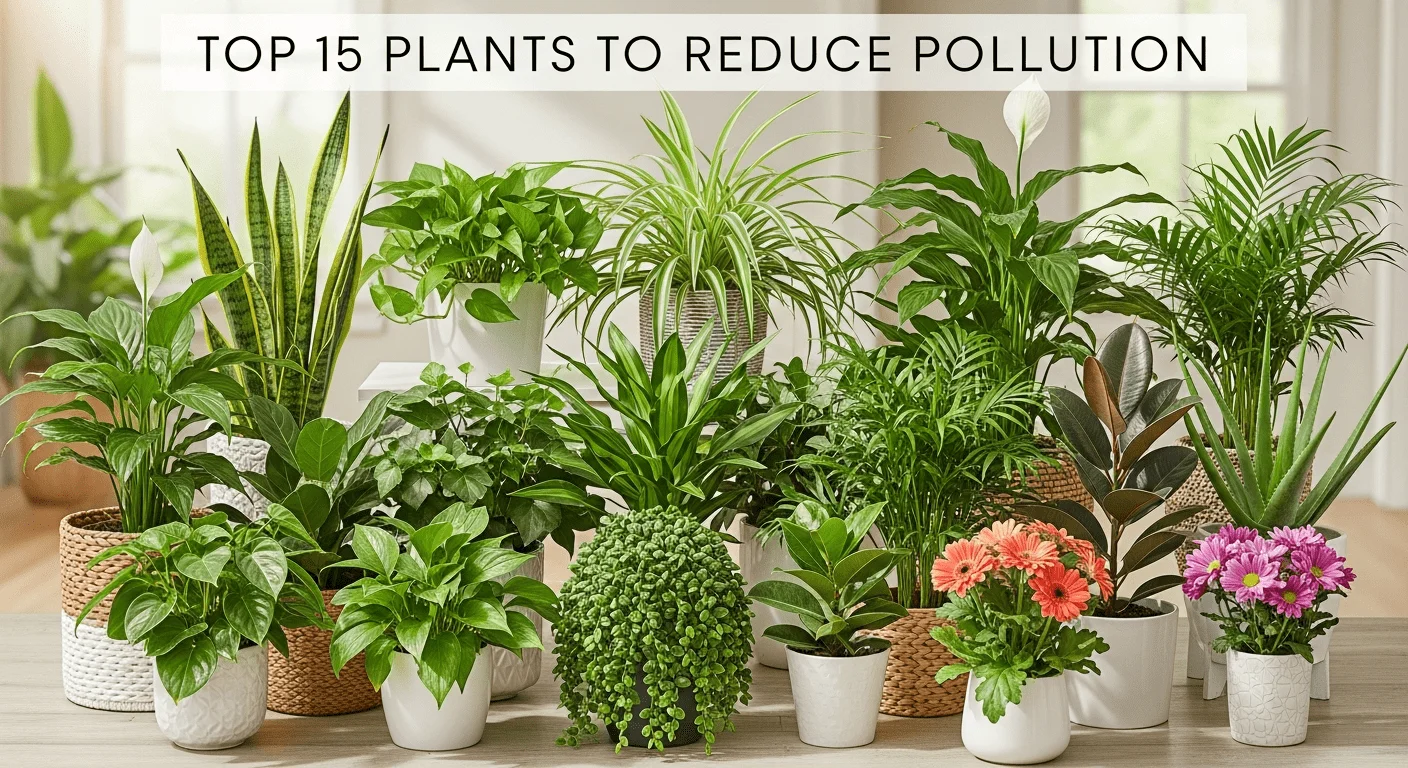
Due to inadequate ventilation, chemical use, and electrical appliances, indoor air pollution is becoming a bigger problem in contemporary homes and workplaces. Dust particles, formaldehyde, benzene, carbon dioxide, and other pollutants can have detrimental effects on health, including headaches, allergies, and respiratory issues. Growing indoor plants is one of the most effective and natural ways to minimize indoor pollution. In addition to improving a room’s aesthetics, indoor plants clean the air by releasing oxygen and absorbing pollutants. Some of the best indoor plants and their advantages for lowering pollution are listed below.
1. Snake Plant (Sansevieria)

One of the best indoor air-purifying plants is the snake plant. It takes up dangerous contaminants like benzene, formaldehyde, and nitrogen oxides. Its ability to release oxygen at night is one of its special features, which makes it a great option for bedrooms. Snake plants require little care and can thrive in environments with little light and moisture.
2. Areca Palm

A common indoor plant, the areca palm is well-known for its capacity to eliminate carbon dioxide and carbon monoxide from the atmosphere. Additionally, it functions as a natural humidifier, lowering dust particles and raising interior moisture levels. Areca Palm is perfect for homes and offices with poor ventilation since it increases air circulation.
3. Peace Lily (Spathiphyllum)

One lovely flowering plant that is very good at minimizing indoor pollution is the peace lily. It takes up harmful gasses like formaldehyde, benzene, and ammonia. Peace lilies are good for allergy sufferers since they also lessen the amount of mold spores in the air. They need moderate watering and do well in low light.
4. Aloe Vera

Aloe Vera is a great indoor air cleaner in addition to its well-known therapeutic qualities. It eliminates dangerous substances like formaldehyde and benzene, which are frequently present in paints and cleaning supplies. Aloe Vera is easy to cultivate and requires very little care; it releases oxygen at night.
5. Spider Plant (Chlorophytum comosum)

One of the best plants for eliminating indoor air pollutants is the spider plant. It takes in xylene, formaldehyde, and carbon monoxide from the atmosphere. In living rooms and kitchens, spider plants are particularly helpful. They are safe for pets, simple to grow, and well suited to indoor settings.
6. Rubber Plant (Ficus elastica)

The rubber plant is highly effective in removing airborne toxins and improving air quality. Its large, broad leaves help trap dust particles and absorb carbon dioxide. Rubber plants are hardy and grow well indoors with indirect sunlight. They also help maintain humidity levels, making indoor air healthier.
7. Boston Fern

Boston Fern is renowned for its capacity to eliminate contaminants such as xylene and formaldehyde. It prevents dryness in indoor spaces and functions as a natural air humidifier. This plant enhances the general freshness of the air and is perfect for households with dry air.
8. Peace Lily (Spathiphyllum)

Peace Lily is both decorative and functional. It absorbs harmful gases such as ammonia, benzene, and formaldehyde. It also reduces mold spores, making it beneficial for allergy sufferers. Peace lilies thrive in low light and need moderate care.
8. Money Plant (Epipremnum aureum)

One of the most popular and efficient indoor plants for reducing pollutants is the money plant. It takes up formaldehyde, carbon monoxide, and other dangerous contaminants. It increases indoor oxygen levels and grows well in soil or water.
9. English Ivy (Hedera helix)

English ivy is well known for lowering allergies and mold in the air. It takes up carbon monoxide, formaldehyde, and benzene. This plant works especially well in bathrooms and bedrooms with greater humidity levels.
10. Chrysanthemum

Bright-flowering plants called chrysanthemums are good in eliminating formaldehyde, benzene, and ammonia from the air. They enhance indoor air quality while enhancing the room’s aesthetic appeal. But they need frequent care and plenty of sunlight.
11. Bamboo Palm

Bamboo Palm helps remove benzene, formaldehyde, and trichloroethylene. It also adds moisture to the air, making indoor environments healthier. This plant is ideal for offices and large indoor spaces.
12. Dracaena

A common indoor plant, dracaena is well-known for its potent capacity to eliminate indoor air contaminants. It absorbs dangerous substances that are frequently discharged by paints, varnishes, and electronic devices, including formaldehyde, benzene, trichloroethylene, and xylene. Dracaena plants are perfect for homes and businesses since they are aesthetically pleasing, thrive in indirect light, and require little watering.
13. Philodendron

Philodendrons are great indoor plants that enhance indoor air quality. Their broad leaves aid in absorbing airborne pollutants like carbon monoxide and formaldehyde. Additionally, they collect dust particles, improving interior air quality. Philodendrons are easy to grow, adapt well to indoor conditions, and add greenery to living spaces.
14. Chinese Evergreen (Aglaonema)

Chinese Evergreen is a resilient indoor plant that aids in the removal of airborne pollutants including formaldehyde and benzene. It needs very little maintenance and works well even in low light. This plant is particularly helpful in places with little sunshine, such workplaces and apartments. Additionally, it enhances the general freshness of the air and raises oxygen levels.
15. Gerbera Daisy

A vibrant and colorful indoor plant that effectively lowers indoor air pollution is the gerbera daisy. It absorbs trichloroethylene and benzene, which are frequently present in paints and household cleaners. Gerbera daisies are good for bedrooms since they release oxygen at night. Additionally, it enhances indoor aesthetics and mood.